Real Costs of Buying a Second Home in Myrtle Beach & Grand Strand
- lorimendieta
- 3 hours ago
- 11 min read

If you are thinking about buying a second home in Myrtle Beach or somewhere along the
Grand Strand, the price on the listing is only the beginning of the financial conversation.
That is usually where buyers are most often surprised.
Not because the costs are hidden. Usually, they are not. It is because coastal second-home ownership has layers, and those layers tend to show up across insurance, HOA structures, furnishing, maintenance, and how often you realistically plan to use the property.
Let me explain this simply.
Buying a second home here can be a very smart lifestyle decision. It can create flexibility, give you a place that fits how you want to spend your time, and reduce the friction of planning repeated trips to the coast. But the purchase only feels clear when you understand the full cost of ownership, not just the sale price and monthly payment.
The goal is not to make the process feel heavier than it is. The goal is to help you evaluate the numbers the way thoughtful buyers usually need to, before they get too far down the road.
Why Real Costs Matter More With a Second Home
With a primary residence, buyers are often focused on the commute, school systems, day-to-day logistics, and immediate monthly affordability. With a second home, the decision framework shifts.
Now, the questions tend to sound more like this:
How easy will this property be to own when I am not here?
How predictable will the expenses be over time?
Am I paying for features I will actually use?
Does this property support flexibility five years from now, not just this summer?
If my plans change, will this still make sense?
That is why second-home buying in the Myrtle Beach and Grand Strand area benefits from a different kind of cost analysis. You are not only buying space. You are buying a pattern of ownership.
And in practice, that usually means the most important costs are the ones connected to ease, predictability, and long-term use.
The Purchase Price: Why It Is Just the First Step
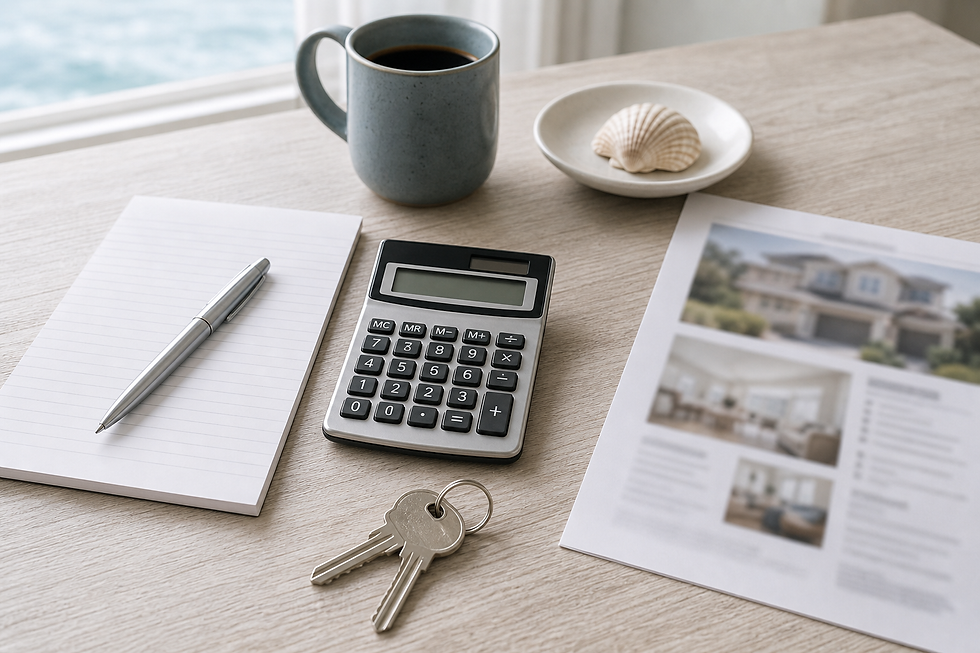
Of course, the purchase price matters. It shapes your financing options, property tax bases, insurance ranges, and long-term carrying costs. But price alone does not tell you whether a property is affordable in the way second-home ownership needs to be affordable.
Two homes can have a similar list price and very different ownership profiles.
For example:
A condo with a higher monthly HOA may cover more exterior maintenance and reduce day-to-day decisions.
A single-family home with no HOA may offer more flexibility, but it shifts more cost and physical responsibility directly onto the owner.
A property closer to the ocean may align better with how you plan to use it, but insurance and storm-related costs may be materially different from a home farther inland.
This is why thoughtful buyers usually compare total monthly and annual ownership costs, not just the listing price.
Understanding Coastal Second-Home Financing
One of the first real-cost shifts buyers notice is financing. Second-home financing is often structurally different from financing a primary residence. Depending on the property type, occupancy use, down payment, reserves, and lender guidelines, the structure can be less flexible than buyers expect.
This is especially important with Grand Strand condos.
In our market, condo financing can vary significantly based on the building itself, not just the buyer’s qualifications. That is where buyers are often caught off guard. A condo may look like a strong fit on paper, but if the project has lending limitations, the financing path can narrow quickly.
In practice, this usually shows up when:
A buyer assumes a standard loan will work for any condo.
A lender reviews project details later in the process.
Building-specific issues affect loan options or terms.
Required cash reserves are higher than expected.
That does not mean condos are a problem. Not at all. It simply means the financing conversation needs to happen early, especially for second-home buyers who want clarity before they commit time and emotion to a specific property.
Navigating Coastal Insurance Layers
If you are buying near the coast, insurance deserves more attention than many buyers initially give it. This is not fear-based. It is just practical.
Insurance in Myrtle Beach and the Grand Strand can include multiple moving parts depending on location and property type. For second-home buyers, that matters because insurance is not a one-time closing expense. It is a fundamental part of the ongoing cost structure.
Depending on the property, buyers may need to account for:
Standard Homeowners insurance
Separate Wind and hail coverage
Coastal Flood insurance
Condo HO-6 coverage for interior contents and improvements
Deductible structures that function differently than buyers expect
Vacant or limited-occupancy considerations, depending on use
Where buyers are most often surprised is not that insurance exists. It is how layered it can be.
For condo buyers, there is often confusion around what the master policy covers versus what the individual owner still needs to insure. For single-family and detached properties, the bigger question is usually exposure, replacement cost, and how coastal location affects premiums.
The right way to think about insurance is this: not as an afterthought, but as part of the property’s ownership identity. Two homes with similar square footage can produce very different insurance profiles based on distance to water, construction style, elevation, association structure, and prior claims history.
Evaluating HOA Fees Beyond the Monthly Number

This is one of the most important mindset shifts for second-home buyers. An HOA fee is not simply an expense to minimize. It is also a clue.
It tells you what ownership responsibilities are being centralized, what services are being handled for you, and how much day-to-day management you are keeping versus outsourcing through the association.
That is especially relevant in a second-home purchase. For buyers who value day-to-day simplicity, an HOA can reduce mental overhead. Exterior maintenance, landscaping, common area upkeep, amenities, pest control, building insurance, and even some utilities may be built into the ownership model.
But not all HOA structures are equal. In practice, buyers need to look at:
What the monthly or quarterly dues actually cover.
Whether capital reserves appear healthy.
Whether deferred maintenance may lead to future assessments.
How the rules affect flexibility and use.
Whether the association structure supports predictable ownership.
A lower HOA fee is not always better if it means underfunded reserves or more surprise costs later. A higher HOA fee is not automatically a drawback if it creates more predictable expenses and less owner coordination.
The question is not, "How do I avoid HOA fees?" The better question is, "What am I receiving in exchange for this fee, and does that trade-off match how I want to own this property?"
Why Special Assessments Require Close Review
This remains especially true for condos and townhomes. Special assessments are one of the most important real-cost categories second-home buyers should understand before closing. They do not happen in every building, but when they do, they can materially change the ownership picture.
Buyers sometimes focus on the current HOA dues and overlook the larger issue: whether the building appears to be planning well for long-term repairs and capital needs.
Thoughtful buyers usually want to know:
Are there known upcoming projects?
Has the association discussed major repairs?
Do the meeting notes suggest pressure points?
Are reserves in line with the building’s needs?
Is the monthly fee artificially low in a way that may create catch-up costs later?
This is one of those areas where the cheapest monthly number can become the most expensive ownership structure over time.
Planning for Setup and Furnishing Costs
A second home is rarely purchased as an abstract asset. It needs to function. And that is where setup costs start to add up.
Even if you are not planning a full design overhaul, buyers often underestimate how much it takes to make a second home feel usable from day one.
That can include:
Full or partial furniture packages
Clean, durable window treatments
Kitchen setups and basic appliances
Fresh linens and storage solutions
Resilient outdoor patio furniture
Up-to-date TVs and electronics
Small aesthetic repairs or cosmetic updates
Secure lock systems or smart-home remote access
Minor housewares you do not think about until move-in week
This tends to be even more noticeable when buyers purchase a property that is technically move-in ready but not practically ready for how they intend to use it. A home can be clean and vacant and still require a meaningful setup budget.
For second-home buyers, this matters because the ownership experience starts almost immediately. If every visit begins with another purchase list or another small maintenance project, the property may not feel as easy to own as you first expected.
Managing Maintenance Costs from a Distance
Distance changes the cost conversation. That is true even if the property itself is in excellent condition.
When you are not living in the home full time, even small ownership tasks can become more complicated. Routine issues that feel manageable in a primary residence can create more friction in a second home simply because you are not there to notice or handle them quickly.
Depending on the property, buyers may need to budget for:
Routine HVAC servicing and filter replacements
Continuous pest control services
Professional landscaping
Mid-season property checks
Emergency storm preparation
Deep cleaning between visits
Minor repair coordination
Someone trusted locally to check on the property when needed
Single-family homes often require more direct, hands-on maintenance planning. Condos may reduce some of that burden, but they do not eliminate it entirely.
Again, this is about trade-offs. Some buyers want maximum flexibility and privacy, even if that means more responsibility. Others would rather pay for a structure that simplifies ownership and reduces coordination. Neither approach is better. It depends on how you want the property to function in your life.
Factoring In Recurring Service and Carry Costs
Utilities and recurring services are easy to underestimate because each one seems relatively small on its own. But together, they shape the true monthly cost of ownership.
That may include:
Standard electric service
Public water and sewer
High-speed internet
Weekly trash pickup
Security monitoring
Pool or spa servicing (if applicable)
Lawn care or irrigation
Professional cleaning services
HOA dues
Annual insurance premiums
Property taxes
The key here is predictability.
Second-home buyers usually benefit from understanding not just average monthly costs, but the seasonal swings. Utility usage in the summer can feel different from the off-season. Storm preparation can create occasional added expenses. Service models may differ depending on whether the property is used frequently, left vacant for periods, or prepared for guests.
The broader point is simple. A property that seems manageable at closing can feel very different once the full carrying cost stack is in place.
South Carolina Property Taxes for Second Homes
Taxes should always be reviewed through the lens of future ownership, not just the current seller’s bill.
South Carolina property taxes vary depending on how the property is classified, and second-home buyers need to understand that the tax structure may not mirror what they are used to in another state. In South Carolina, primary residences may qualify for a 4% assessment rate, whereas second homes and investment properties are assessed at a 6% rate, which can lead to a notable difference in the annual bill.
This is one of those areas where buyers benefit from asking direct questions early. Not because the taxes are necessarily prohibitive, but because assumptions create confusion.
A current tax bill does not always tell the full future story for the next owner.
That is why I always recommend looking at property taxes as part of the forward cost model, not as a backward-looking snapshot.
Condos vs. Single-Family Homes: The Operational Choice

In the Myrtle Beach and Grand Strand market, many second-home buyers begin by comparing condos and single-family homes primarily on price. That makes sense, but it is not enough.
The better comparison is ownership structure.
A condo may offer:
More centralized maintenance.
Built-in amenity access.
Less exterior responsibility.
A more predictable routine for part-time owners.
A single-family home may offer:
More personal privacy.
Fewer shared rules.
More flexibility in how the property is used.
Greater responsibility for maintenance and exterior systems.
Where buyers are most often surprised is assuming one category is automatically simpler or less expensive.
Sometimes the condo is the easier ownership model, but not the less expensive one. Sometimes the single-family home has lower recurring fees, but higher variability and more hands-on management.
Its right question is not, “Which one is cheaper?” It is, “Which ownership model fits how I want to spend my time, what I want to manage, and how predictable I want this to feel?”
That is a much more useful framework.
Navigating Future Rental Flexibility

Even buyers who are purchasing primarily for personal use sometimes want the option to rent the property in the future. If that possibility exists, it needs to be part of the upfront analysis.
This is where buyers should pay attention to:
HOA rental rules and restrictions
Minimum rental periods
Professional property management costs
Upgraded furnishing requirements
Wear-and-tear expectations
Insurance implications
Cleaning and turnover costs
Local and building-specific restrictions
In practice, this usually shows up when a buyer falls in love with a property and only later realizes the use flexibility is narrower than expected.
That is why second-home buyers benefit from deciding early whether rental flexibility is important, even if it is only a “maybe.” It helps narrow the right property type from the start.
The Cost of Convenience vs. Friction
This is one of the most helpful reframes for second-home buyers. Not every meaningful cost is something to avoid.
Sometimes a higher HOA fee, a better-maintained building, a newer property, or a more centralized location is not just an added expense. It is a decision to reduce friction.
That can mean:
Fewer maintenance decisions.
Less time coordinating vendors.
More predictable ownership.
Easier arrival and departure.
Better long-term usability for changing life stages.
For buyers who plan ahead, that kind of ease can be financially and practically worthwhile. The mistake is not paying for convenience. The mistake is paying for it without realizing that is what you are choosing, or rejecting it without considering what extra coordination you are taking on in return.
A Practical Second-Home Budget Framework
If you want a clearer way to evaluate a second home purchase, think in three categories:
1. Upfront Costs
Down payment
Closing costs
Initial insurance setup
Furnishing and move-in setup
Immediate repairs or updates
2. Ongoing Fixed Costs
Mortgage payment
HOA dues
Insurance
Property taxes
Regular utilities and recurring services
3. Ongoing Variable Costs
Maintenance and repairs
Storm preparation
Replacement items
Travel-related ownership expenses
Special assessments
Occasional management or check-in support
That framework tends to make decisions much clearer. It helps buyers compare properties honestly. It also reduces the risk of choosing a home based on the lowest headline number instead of the most sustainable ownership structure.
Summary Checklist for Grand Strand Buyers
Every market has its own cost patterns. In the Myrtle Beach and Grand Strand area, second-home buyers should pay especially close attention to:
Coastal insurance structure and HO-8 vs. HO-6 policies.
HOA scope, capital reserve health, and current meeting minutes.
Condo financing eligibility (warrantability) and project-specific guidelines.
Long-term property type differences.
Local maintenance demands when you are not in town.
Whether the property supports the kind of ownership rhythm you actually want.
That last point matters more than people think. A second home should not create unnecessary decision fatigue. It should fit how you plan to use it, how often you will be here, and how involved you want to be when something needs attention.
Putting It All Together
Buying a second home here is not just about what you can purchase. It is about what you can own well.
Those are not always the same thing.
The right property is usually the one that aligns with your budget, your time, your ownership preferences, and your longer-term plans, not simply the one with the most appealing list price or the lowest monthly fee.
When buyers understand the real costs early, they tend to make clearer decisions. They compare options more intelligently. They ask better questions. And the purchase feels far more straightforward because fewer surprises are waiting on the other side of the contract.
A Simple Next Step

If you are considering a second home in Myrtle Beach or the Grand Strand and want help pressure-testing the real cost of ownership between a few options, I’m always happy to walk through it with you.
Sometimes a short conversation is all it takes to bring the numbers into focus and make the next step feel clear.
Lori Lee Mendieta, REALTOR®
Century 21 The Harrelson Group
Main Office: 843-903-3550
Direct Office: 843-975-2335
Mobile: 843-429-1578
Email: lmendieta@c21harrelson.com


Comments